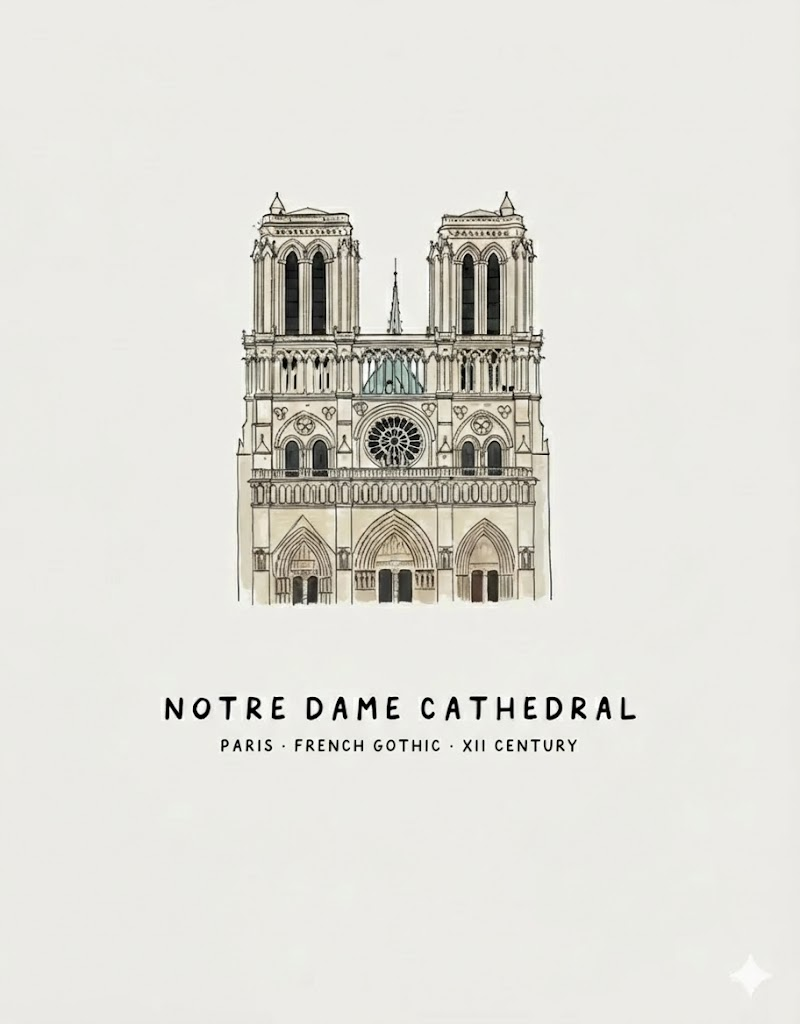
Notre Dame Cathedral
A spiritual and cultural anchor of France for over 800 years, it has survived revolutions, hosted Napoleon’s coronation, and remains a global symbol of resilience.
Commissioned in 1163 by Bishop Maurice de Sully, it was built on the Île de la Cité to replace an earlier Romanesque cathedral that was no longer sufficient for Paris's growing stature.
Known for the pioneered use of flying buttresses, which allowed for thinner walls and massive stained-glass rose windows that flood the nave with "divine light."
The transition from Early to High Gothic is visible in the structural evolution, featuring intricate rib vaulting and a facade governed by the "Golden Ratio" for perfect visual balance.
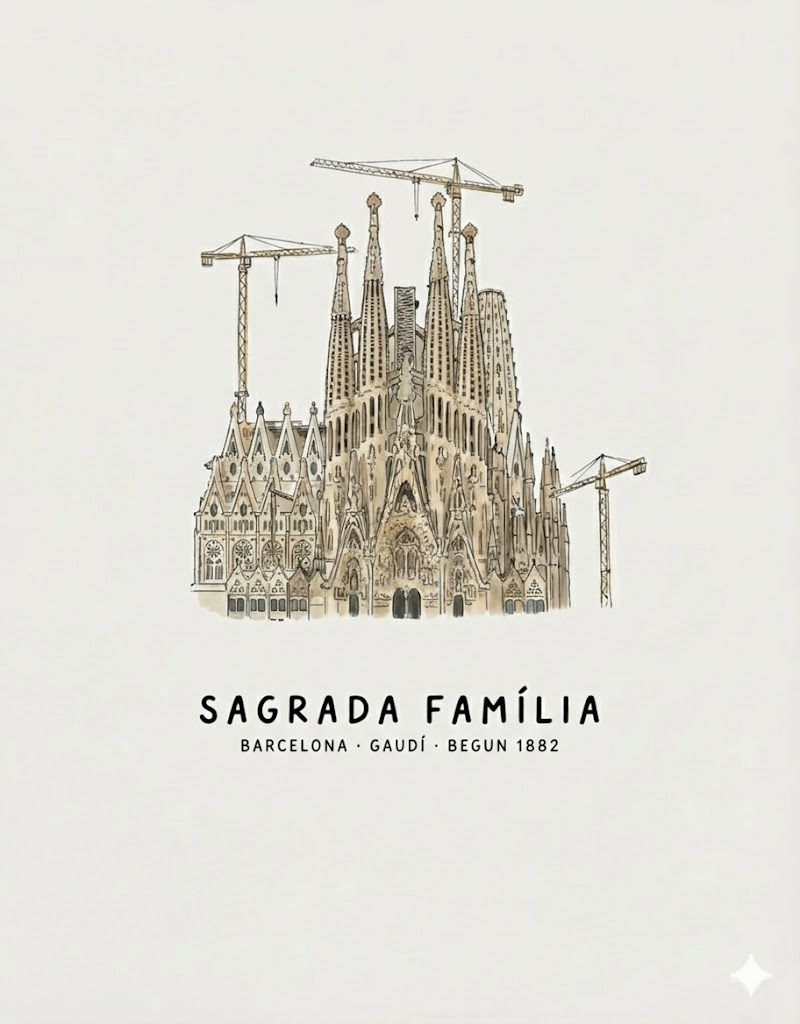
Sagrada Família
A "Bible in Stone" and the spiritual heart of Catalonia.
Begun in 1882 by Villar, then taken over by Gaudí in 1883, who spent 43 years on it.
Organic, forest-like columns that branch out to support the ceiling.
No straight lines or sharp angles; everything mimics nature's geometry.

Taj Mahal
The ultimate monument to eternal love and the pinnacle of Indo-Islamic art.
Built by Emperor Shah Jahan in 1632 as a tomb for his wife, Mumtaz Mahal.
Perfect bilateral symmetry along the central axis of the gardens.
"Pietra Dura" inlay using semi-precious stones to create floral motifs in marble.
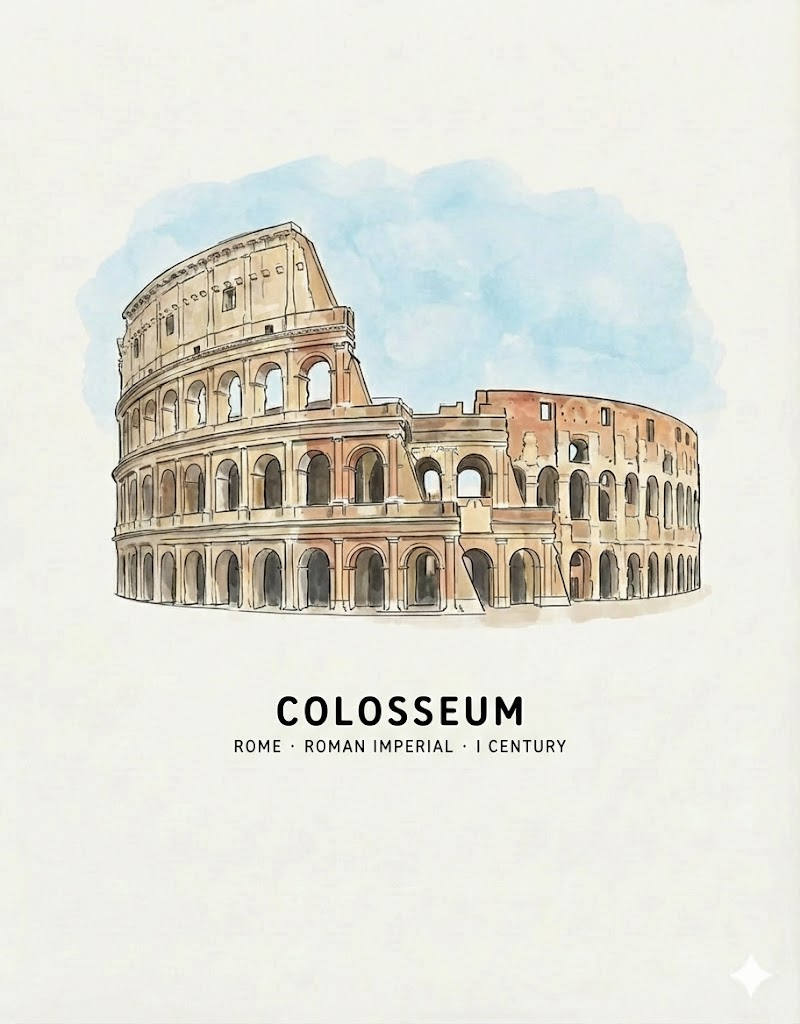
The Colosseum
The largest amphitheater ever built; the epicenter of Roman social life.
Commissioned by Emperor Vespasian in 72 AD as a gift to the Roman citizens.
The sophisticated system of tiered seating and 80 numbered entrances (vomitoria).
The use of concrete and "superimposed orders" (Doric, Ionic, and Corinthian columns).
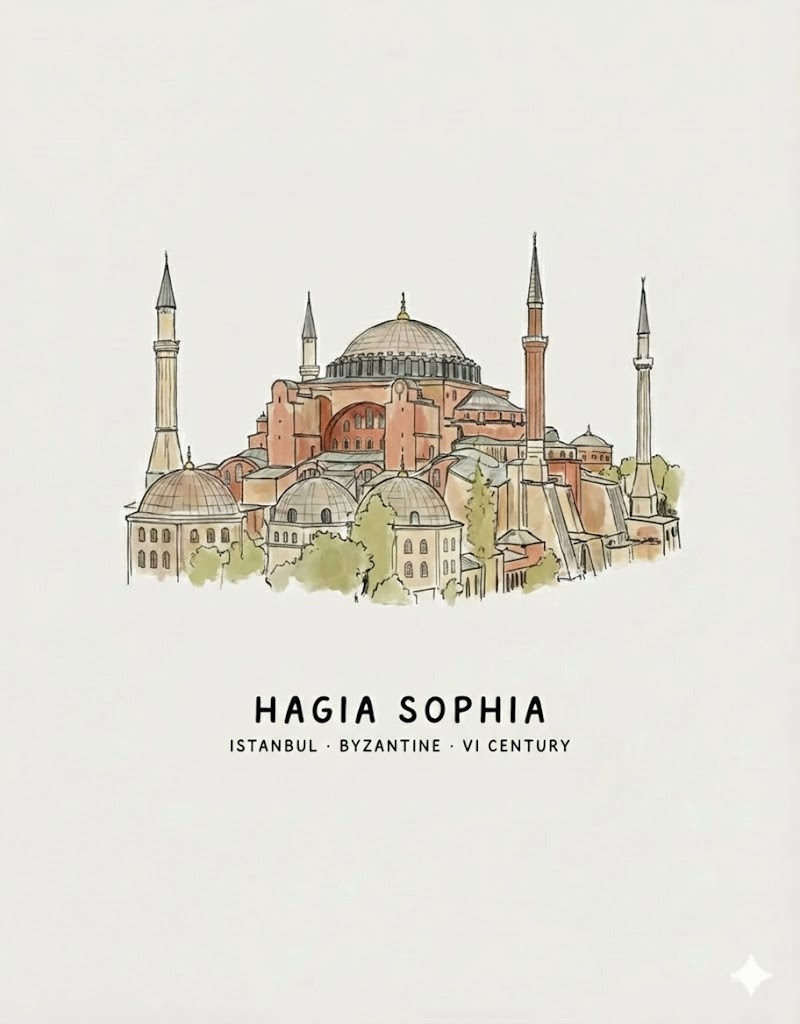
Hagia Sophia
A bridge between East and West, serving as both a Cathedral and a Mosque.
Built in 537 AD by Justinian I to demonstrate the power of the Byzantine Empire.
The massive hovering dome, which was a feat of engineering for the 6th century.
40 windows at the base of the dome make it appear as if it is floating on light.
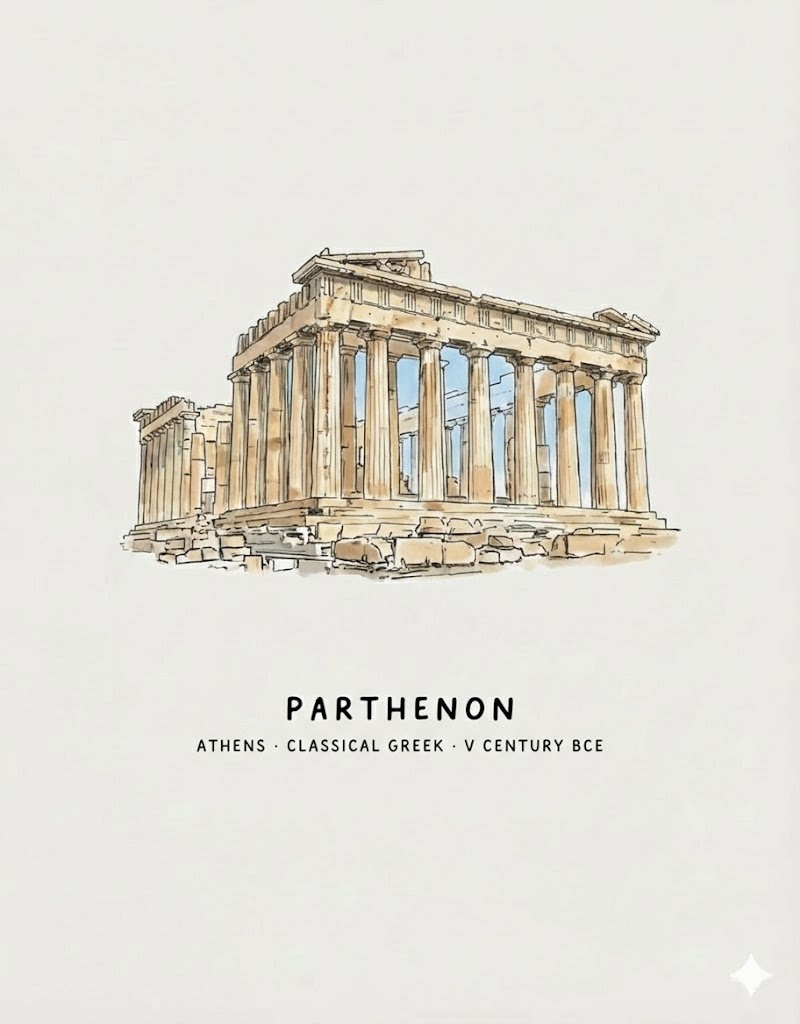
The Parthenon
The birth-temple of Western Democracy and Classical philosophy.
Built between 447-432 BCE to honor Athena and celebrate the victory over Persia.
The "Entasis" effect—subtle curves meant to correct optical illusions.
There are no truly straight horizontal lines; the base is slightly convex.
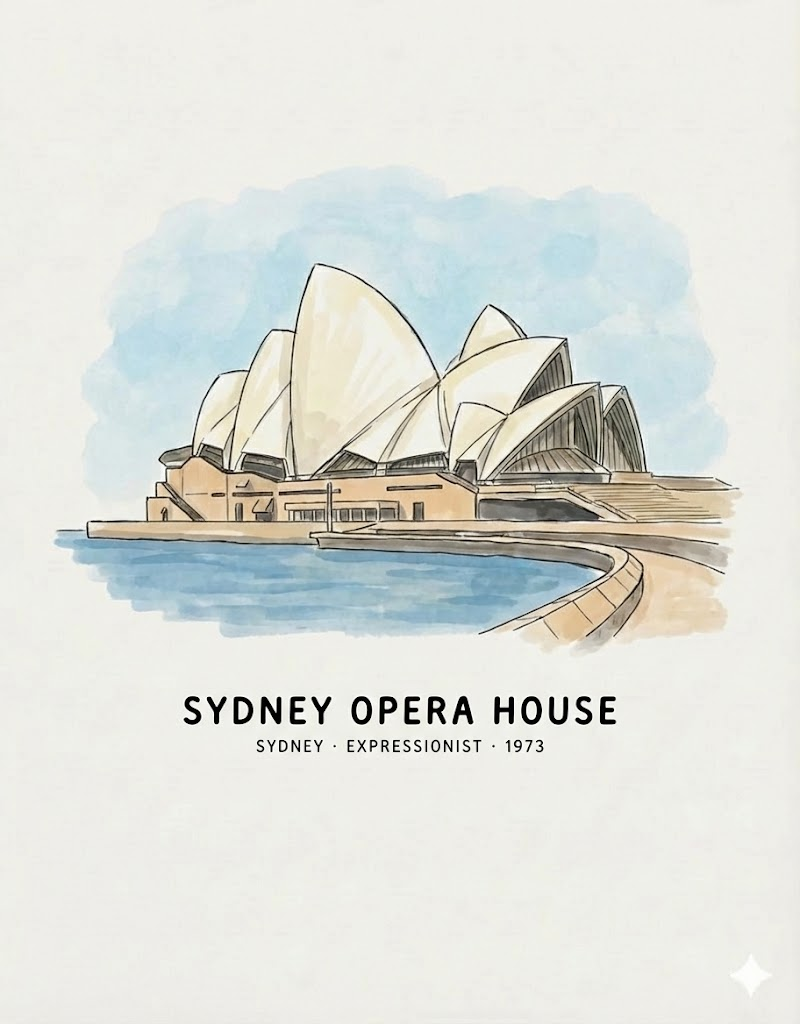
Sydney Opera House
A 20th-century masterpiece that redefined Australia's global identity.
Designed by Jørn Utzon after winning a 1957 international design competition.
The precast concrete "shells" or sails covered in over a million ceramic tiles.
Inspired by the segments of an orange, allowing the spheres to be prefabricated.